The Upgrade Paradox
In the metal recycling industry, the goal is always “longer wear life.” It seems logical: buy a harder hammer, get more tons per set. But recently, a long-time customer of ours experienced the “Upgrade Paradox.”
They switched from standard DHT manganese hammer to a harder UHT hammer to extend their run cycles. The hammers performed beautifully, showing minimal wear after the few weeks. But the pins told a different story.
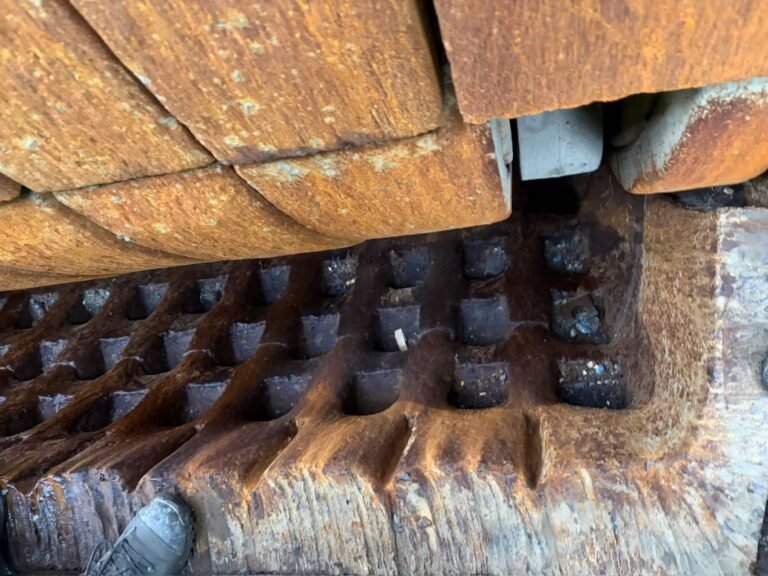
They were seeing premature pin failure, severe grooving and “necking” where the pin contacts the hammer eye. The crew was frustrated and called us for help.
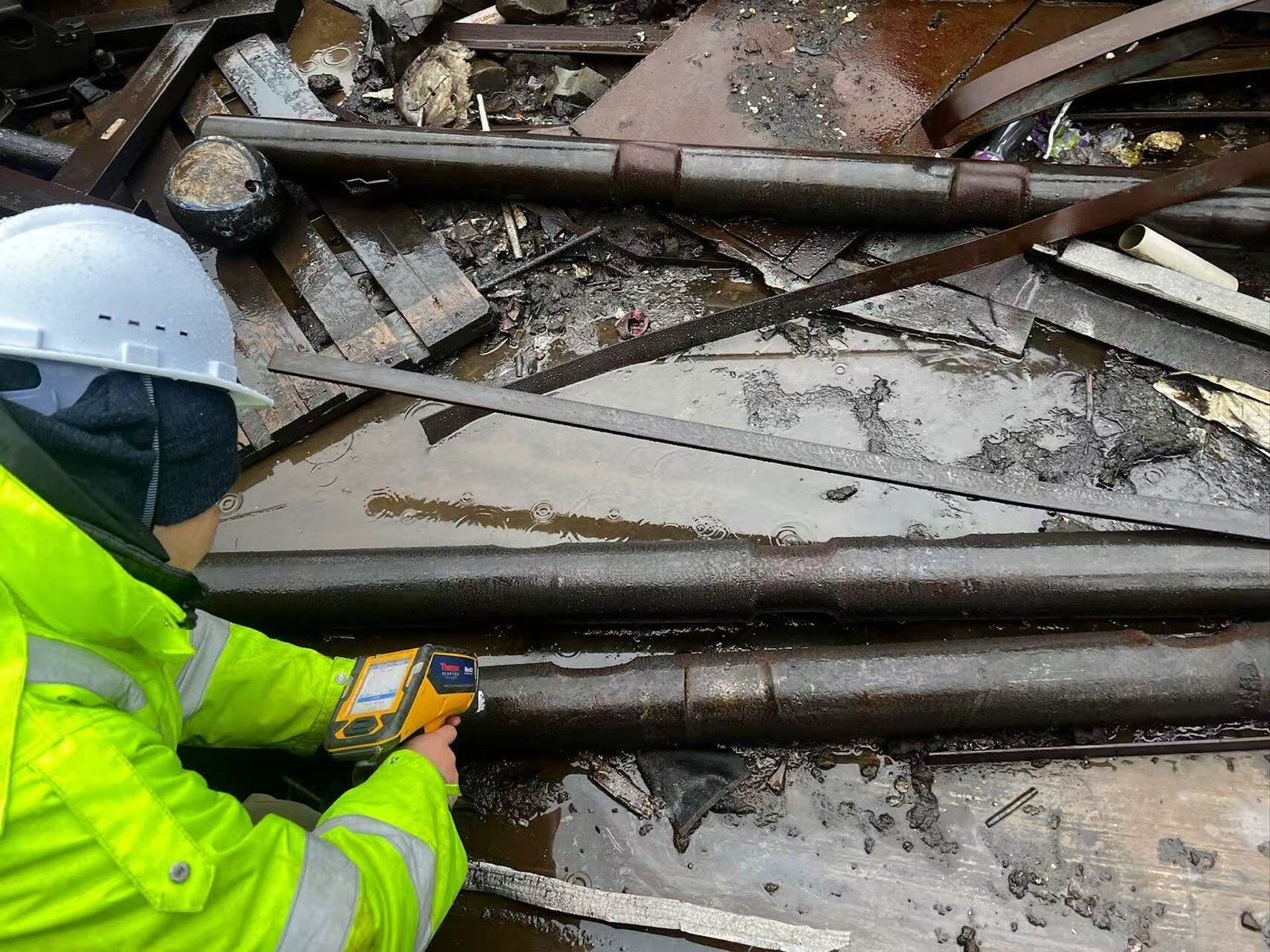
We immediately sent a technical lead to the yard to inspect the scrap pile and the rotor. We performed several tests and found out that the pins weren’t defective. The problem was the system is unbalanced.
A shredder rotor is an ecosystem. When you change one variable (hammer hardness), you change the stress on every other component.
-
The new UHT hammers had a much higher Rockwell Hardness (HRC) at the eye than the previous DHT hammers.
-
The hammer eye was now significantly harder than the standard pin. During operation, the harder steel of the hammer was essentially “machining” the softer steel of the pin, acting like a lathe and cutting into it with every rotation.
The Trium Solution
We didn’t just tell them to “buy new pins.” We needed to keep them running immediately while we engineered a permanent fix.
1. The Immediate Fix (Field Welding) To prevent a shutdown mid-cycle, our technical team guided their maintenance crew through a specific welding technique to reinforce the existing pins. This intervention allowed the pins to withstand the harder hammers for the remainder of the production run, bridging the gap until the new custom parts could be manufactured.
2. The Permanent Fix (Metallurgical Matching) For their next order, we adjusted the chemistry. We didn’t lower the quality of the hammer; we raised the standard of the pin. We formulated a custom alloy pin with a higher core hardness to match the intensity of the UHT hammers.
The Lesson:
You cannot view wear parts in isolation. If you upgrade your hammers to a harder alloy, you must ensure your pins and rotor caps can handle the increased aggression.
At Trium Corporation, we don’t just sell parts. We engineer compatibility. If you are seeing unusual wear patterns after switching alloys, email us. We will help you balance the system.