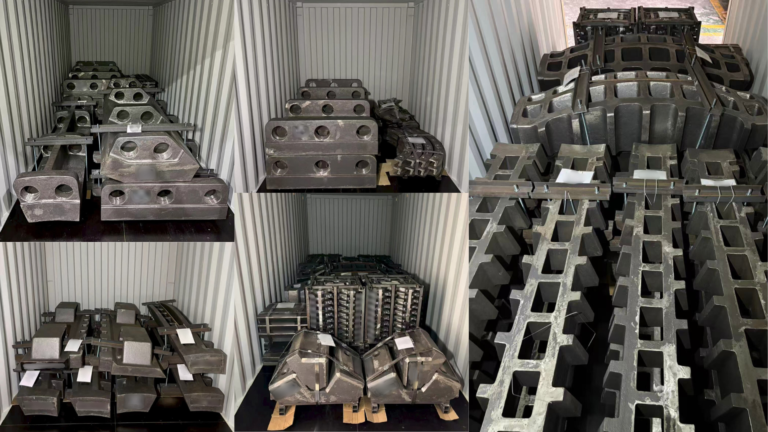
Scaling a recycling operation requires wear parts you can rely on, batch after batch. As our partners have expanded their feeder yards and pushed their shredders to new limits, their demand for high-quality castings has skyrocketed.
But as we analyzed the broader market, we noticed an industry-wide problem: as foundries scaled up to meet this higher capacity, part consistency plummeted. Customers were receiving batches where one hammer would last for months, while another from the exact same order would snap or wear prematurely.
The Core of the Problem: Heat Treatment
We knew exactly where the failure was happening. The secret to a wear part isn’t just in the chemical pour. It’s in the heat treatment.
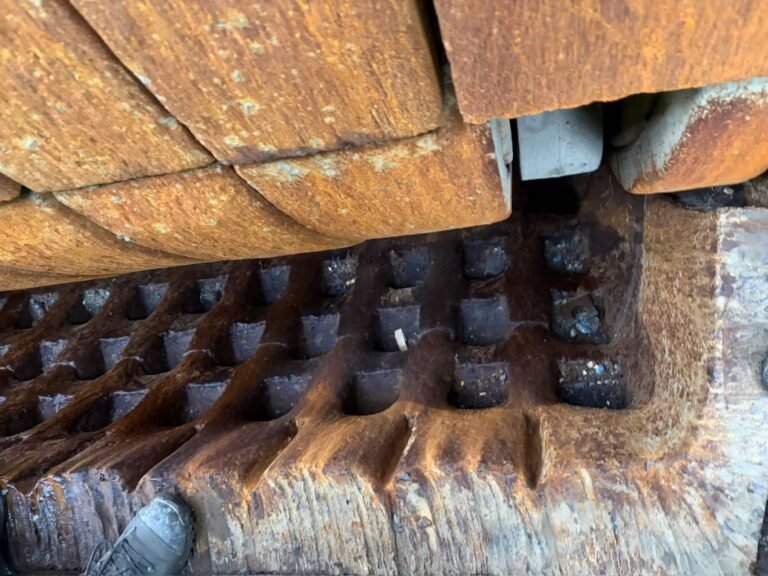
Heat treatment dictates the entire microstructure of the steel. You can have the perfect alloy chemistry, but if the heating and quenching process isn’t completely uniform, the part will fail. For example, manganese steel must be heated precisely to fully dissolve its internal carbides. If the metal cools too slowly before hitting the quench tank, those carbides re-form into brittle boundaries, causing the hammer to crack under heavy impact. Conversely, for low-alloy steel parts, poor temperature control fails to lock in the proper hardness, leaving the metal too soft and causing it to round off rapidly against the scrap.
Traditional foundries rely on manual furnace operations, analog temperature logs, and slow, mechanically cranked doors. When processing small batches, this sometimes works. But when dealing with high-capacity loads, human error and slow machinery destroy the structural integrity of the steel.
The Trium Corporation Solution
We refuse to compromise quality for volume. To ensure our customers never have to guess how long their parts will last, Trium Corporation recently finalized a $2.2 million complete overhaul of our heat treatment facility.
We didn’t just expand our footprint to handle massive, high-capacity loads to reduce lead times; we modernized every single variable of the process:
-
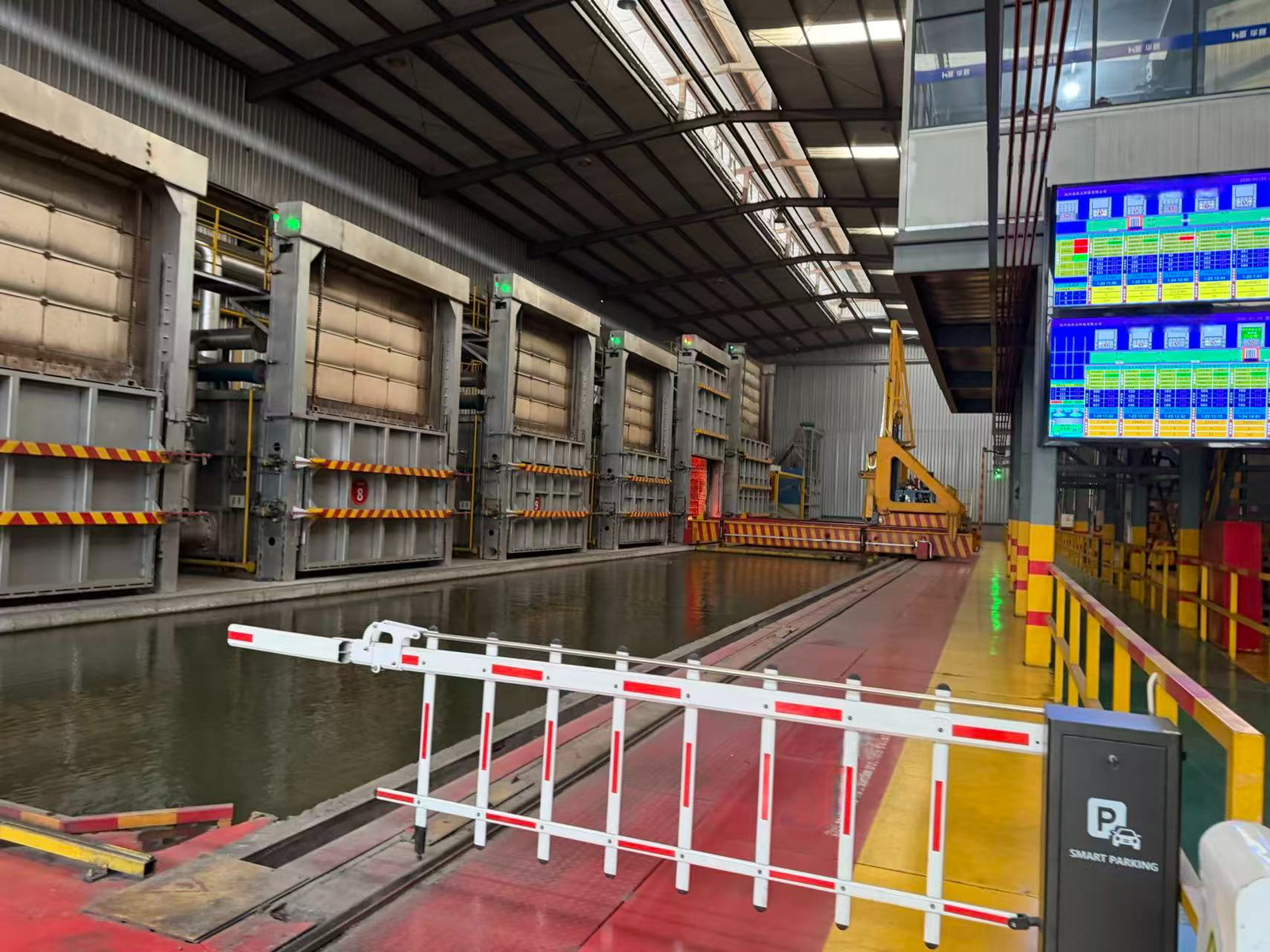
Fully Digitized Monitoring: We removed human guesswork from the equation. Our new high-capacity furnaces are governed by fully digitized sensor networks. Heating curves, soak times, and environmental variables are controlled by a centralized computer system that guarantees perfect temperature uniformity across the entire load, no matter how large the batch is.
-
Hydraulic-Powered Systems: Why does a hydraulic-powered system matter? Quench speed and safety. When a batch of steel reaches its critical temperature, it must be transferred into the quench tank almost instantly to lock in its mechanical properties. Our new heavy-duty hydraulic furnace doors open in a fraction of a second, allowing the platform to drop the entire high-capacity load into the quench seamlessly. Old mechanical doors waste precious seconds, allowing the metal to cool unevenly in the air. Hydraulic automation guarantees that the exact structural hardness is locked in perfectly, every single time.
The Takeaway
Your shredder handles massive volumes of scrap, and you need a wear part supplier who can match your scale without sacrificing a single degree of quality.
At Trium Corporation, our $2.2 million investment in digitized, hydraulic-powered heat treatment facility means we can deliver higher capacities than ever before, with a consistency that manual foundries simply cannot match. When you install our castings, you are bolting on guaranteed, repeatable performance. If your current wear parts are giving you unpredictable results, give us a call. We’ll show you what true precision looks like.